Every adult carries within them moments and seasons that have left deep marks — chapters that shape who we are. Some of these moments rise like towering monoliths in the landscape of our memory. The world around them may have faded, but their essence endures, solid as bedrock. For me, that monolith is Malaysia. The year was 1988.
I was only 15 when I boarded a plane bound for Kuala Lumpur, heart pounding with excitement and nerves. All I knew about Malaysia came from quiet hours spent flipping through books at the local library — politics, government systems, religion. Concepts. Abstract ideas. Nothing that could have prepared me for what was to come.
After a week in an orientation camp in the capital, 28 of us exchange students — from Australia, New Zealand, Japan, the U.S., and Denmark — were loaded onto buses and scattered across the country.
I was set to live with a local host family in northern Malaysia, near the town of Kangar. Eight hours later, I was met by my local AFS contact and driven to what would be my new home: a young couple in their mid-thirties, raising three boys aged 8, 11, and 14.
A Hard Beginning
It didn’t take long to realize: this was going to be difficult.
In the beginning, it seemed my presence was a point of pride. A foreign exchange student — something to show off. But beneath the surface, things were falling apart.
Not long after I arrived, the father lost his job at a construction site. The mother was a homemaker. The family suddenly had no income — and now, one more mouth to feed. I could feel it: I wasn’t just a guest. I was a burden.
Those first months were a crash course in survival. I started picking up Bahasa Malaysia — thankfully, a relatively simple language — and began to navigate a school system unlike anything I’d known back home. But the real education came at home, where powerlessness took the shape of discipline.
The first time it happened, I froze.
When the boys misbehaved, came home late, or brought back poor grades, the belt came off the wall hook. The beatings left them in tears. I sat in the living room, stunned, unsure what to do. So I pulled out a pad of writing paper and began to write.
That became my voice.
The mother was kind and caring — but powerless against the violence. I was occasionally scolded but never struck.
The house itself was humble: a small living room, a simple kitchen with a stone counter and a fridge, and two cramped bedrooms. I shared one with the three boys, sleeping on the bottom bunk. At night, a tiny fan hummed beside us, our only defense against the heat and mosquitoes.
One day, the power went out. No more fridge, no light, no fan. The bills hadn’t been paid. Suddenly, survival meant even less sleep — and more discomfort.
Somehow, I became the imagined solution. I could sense it: they hoped I’d save them financially. But I had no means. I had pocket money, nothing more.
Each day began at six. A cold scoop bath in the open, using water from a rain barrel. School uniform on. No breakfast — I ate at the school canteen. Lunch too. After school, I’d take the bus into Kangar, just to escape the house — to walk the streets, cool off in air-conditioned shops, and find something to eat before returning.
Each evening, I scrubbed my uniform and shoes behind the house, prepping for the next day. Cleanliness was crucial — the school’s strict headmaster didn’t hesitate to hand out public punishments. I didn’t want to be next.
Rescued
After four months, I broke. The violence. The financial strain. The absence of care. I reached out to my AFS contact.
She acted fast. Within days, I had a new home.
Everything changed.
My new host family were middle class. No luxury, but no scarcity either. The parents both worked. The house was filled not just with food, but with laughter, stories, love. The survival mode I’d been stuck in faded. My resilience had been tested, and I’d come through. Now I felt like I could handle anything.
My first host family was Malay and Muslim. The new one was of Indian heritage and Hindu. The shift was so profound, it felt like I’d crossed a border — yet I had only moved a few kilometers.
In the new home, we spoke English, mixed with Bahasa Malaysia and Tamil.
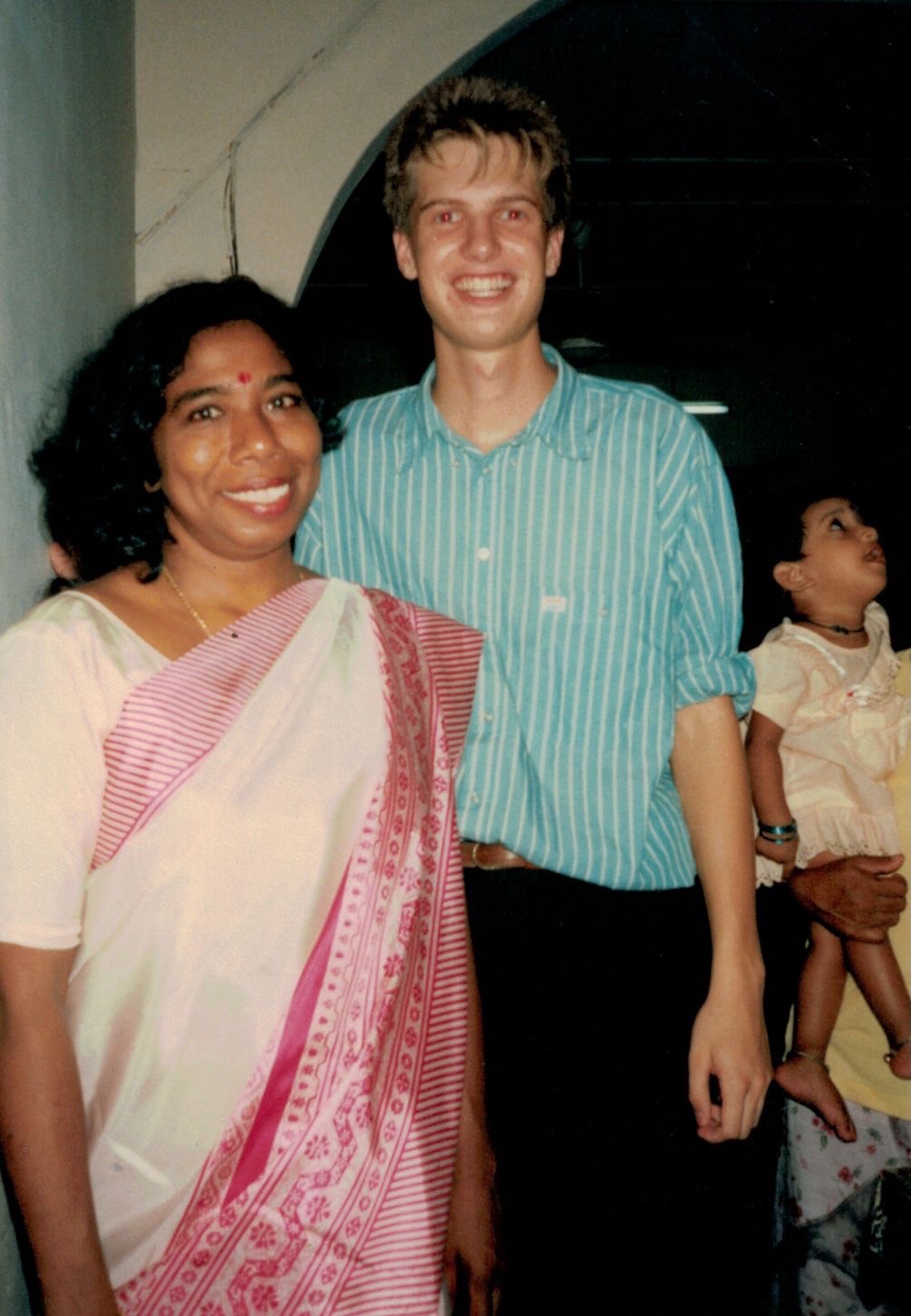
My new family: Meenachi, the mother; Suppiah, the father; their son Appu and daughter Rajish. They also had an older son, Sri, who was studying abroad — I never met him, but his presence lingered in the stories they told.
Malaysia taught me more in one year than any classroom ever could. It shaped me, scarred me, strengthened me.
And even now, decades later, that monolith of 1988 still stands — quiet, solid, and unforgettable.
Back in Kangar
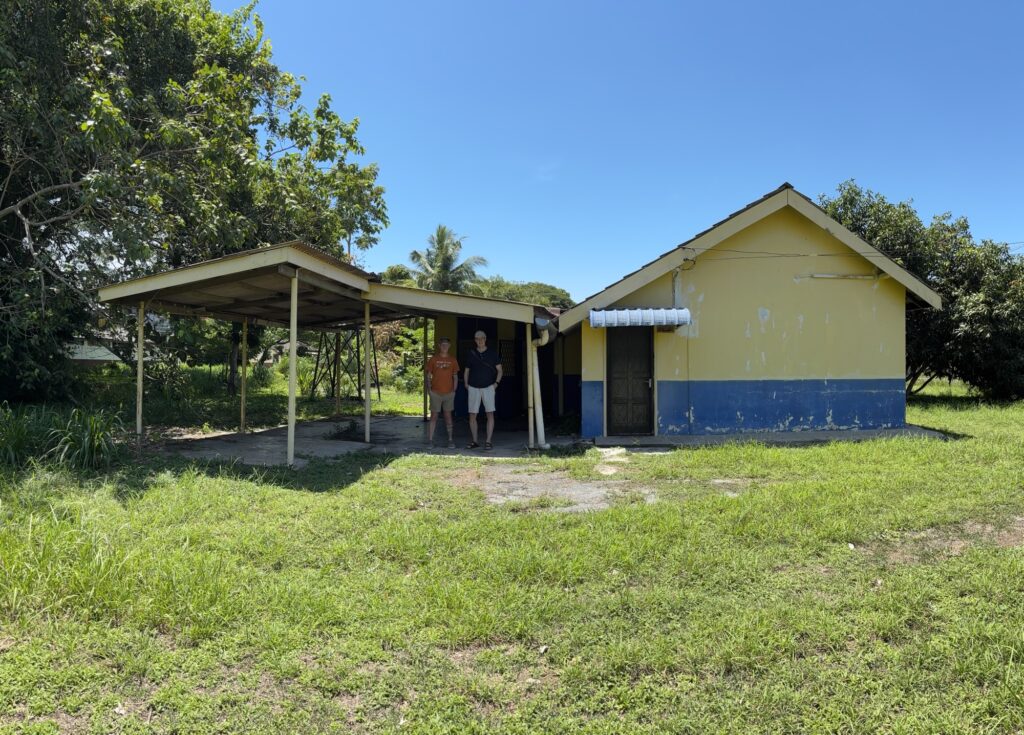
Thirty-seven years later, I find myself once again standing in front of the house that had given me so much — laughter, belonging, and a sense of home. The family has long since moved to Kuala Lumpur, but our bond remains. Especially with Rajish, my host sister, who over the years has become the bridge back to that time. Through her, I have followed the family’s joys and sorrows. One of the hardest to hear was the passing of Meenachi. Her warmth, her boundless energy, her infectious smile — they still live on in the people she touched.
This time, I have returned to Kangar with my own family and good friends from New Zealand. We made a stop by the house — the one that had once been filled with conversation, shared meals, and the steady rhythm of everyday life.
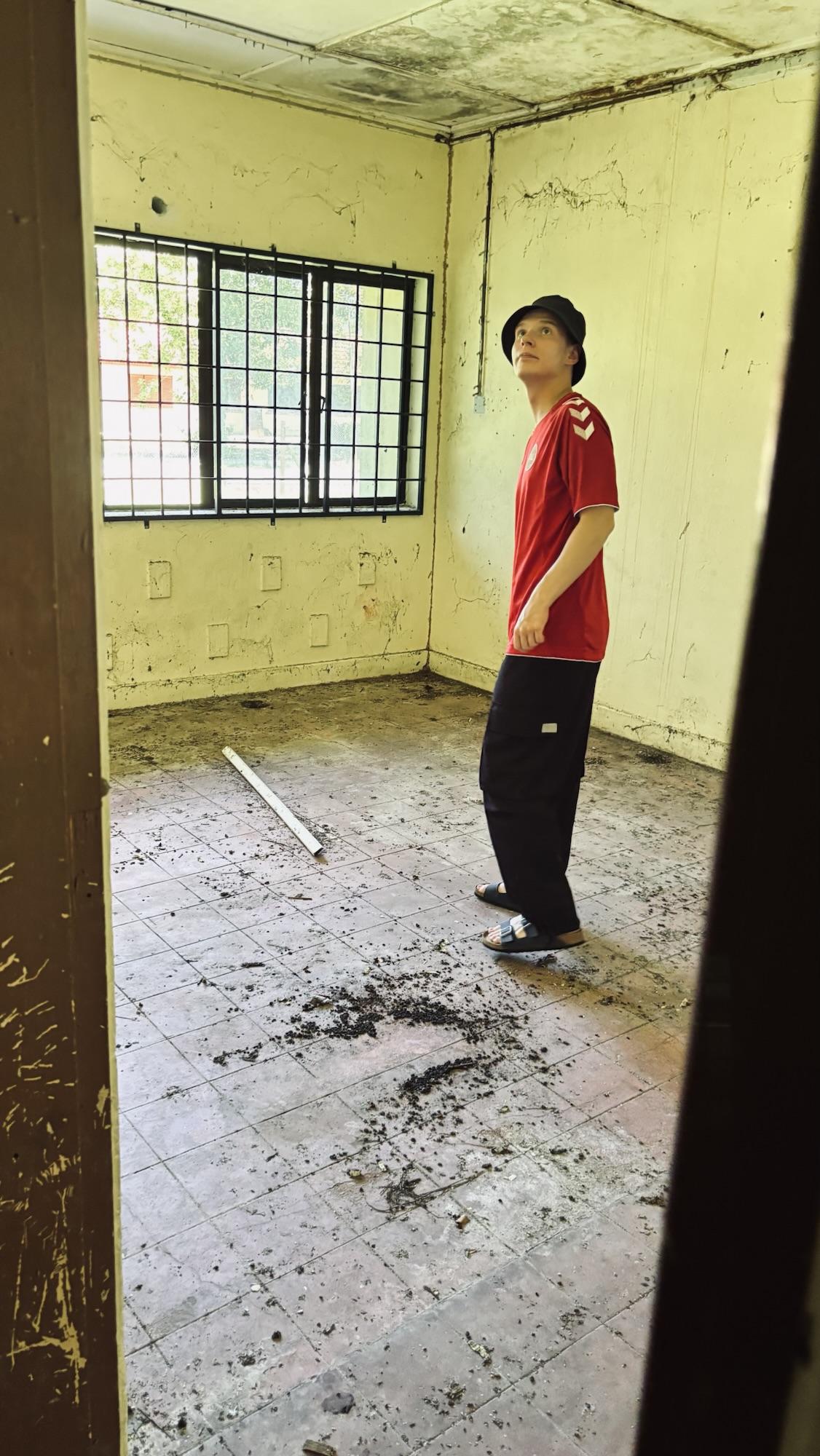
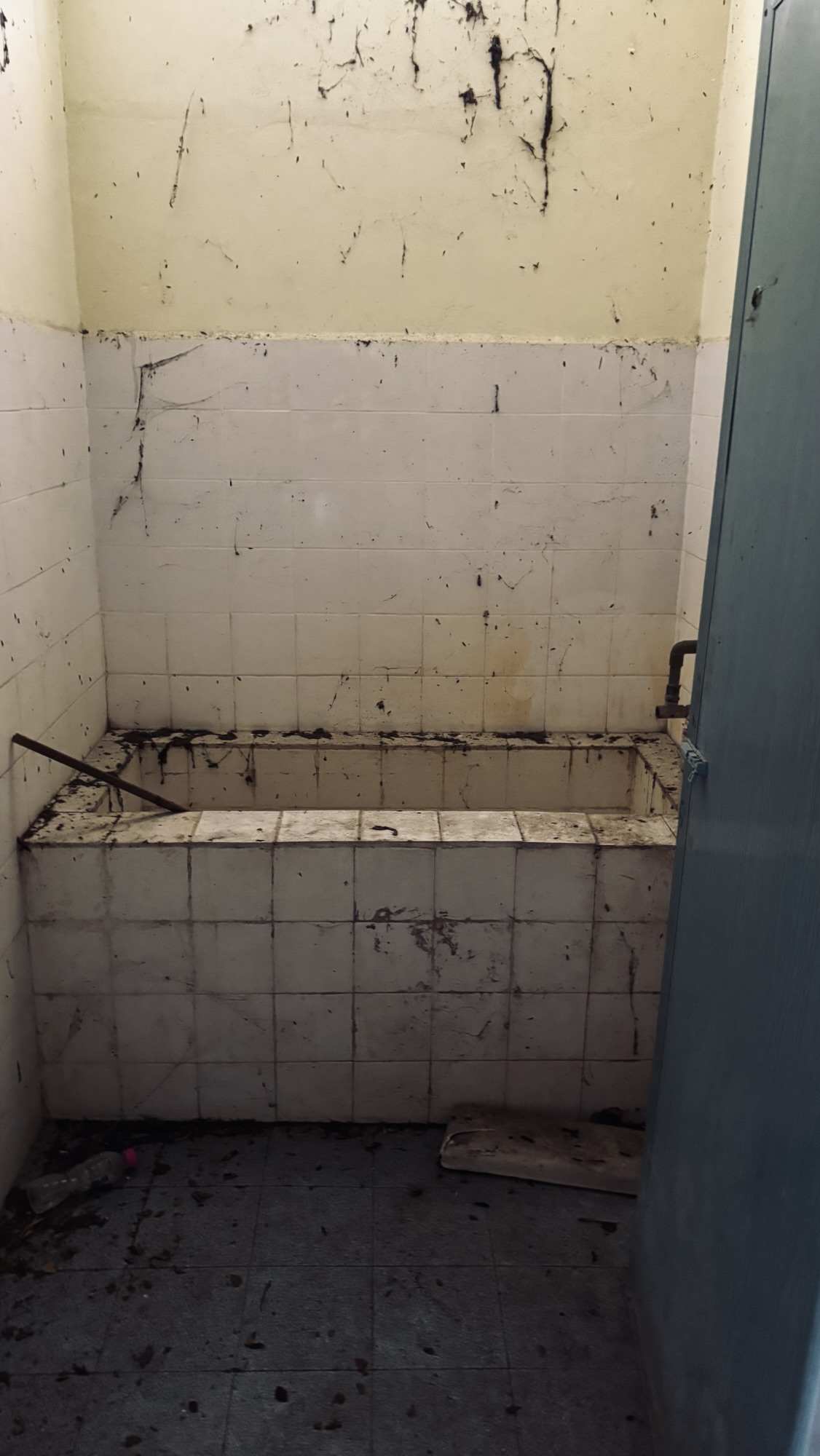
It now stood empty and was falling apart. Still, we stepped inside, curious and a little nostalgic.
The rooms were quiet, but the memories came easily. It was a little sad to see the place in such a state — but also special to revisit what used to be my home. It was a simple moment — one that tied the past to the present. Just what I needed.