
Day 2: Ancient forest, tides, and untouched beaches
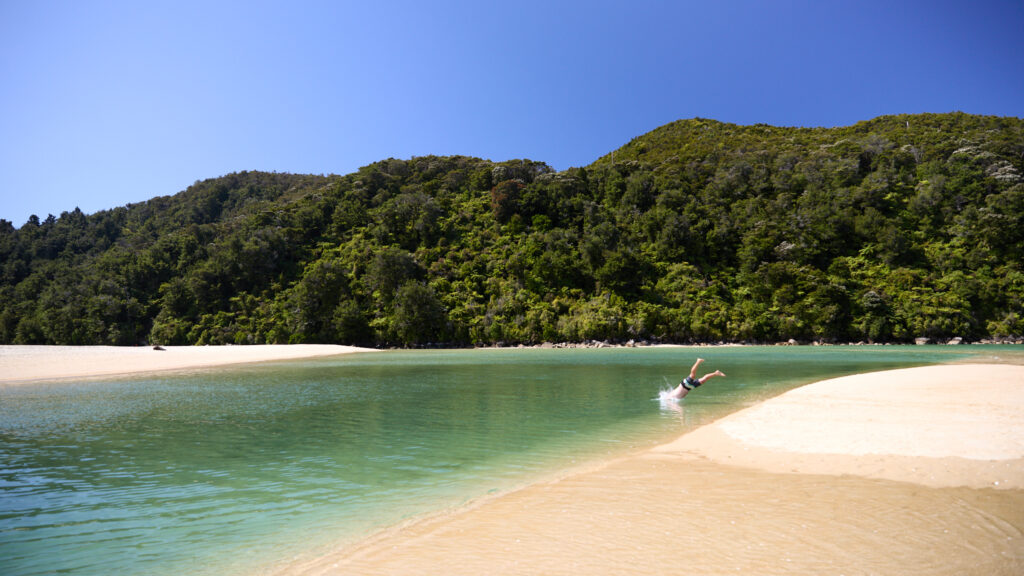
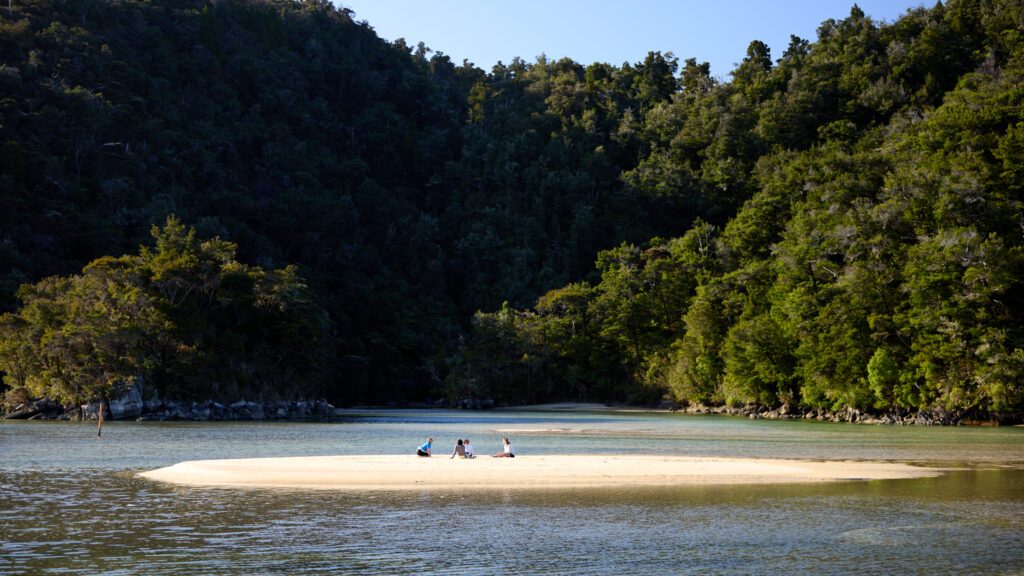
One of the most beautiful places I have ever visited is Bark Bay in Abel Tasman National Park. The bay unfolds with soft, golden sand, crystal-clear turquoise water, and a perfect semicircle of forest-covered hills. The contrast between the dense, green ancient forest and the vivid colours of the sea is both calming and breathtaking — especially in the early morning light or late in the day.
From Awaroa, where I wrestled with my tent and inquisitive weka birds, the journey now continues to Bark Bay along well-marked trails through dense undergrowth of mānuka trees and tree ferns, giving the landscape an almost subtropical character. The walk is estimated to take around four hours for an average hiker. For me, it took seven! I am in no hurry and constantly stop to explore interesting details and motifs in the landscape. I don’t want to miss a thing, so I follow a simple rule: I take every side trail that presents itself, as long as it is less than a 30-minute detour from the main route. That is the reason for my slow progress.
My pack on the hike to Bark Bay consists of nothing more than my camera bag, filled with heavy professional equipment. Abel Tasman Aqua Taxi, which transported me into the national park, offers an invaluable service they call bag transfer. In practice, this means leaving your bag with clothing, food, and camping gear at an agreed spot on the beach where you have been staying. Abel Tasman Aqua Taxi then collects the bag and delivers it to your next campsite. This allows you to hike unencumbered and move more freely through the national park — a service I can highly recommend.
The tides in Abel Tasman set the rhythm for both life and landscape in the national park. Along the coast, sea levels can rise and fall by around five metres between low and high tide. As a result, beaches, sandbanks, and tidal lagoons may be completely submerged at high tide, only to transform into wide expanses of sand when the water recedes. This tidal dynamic plays a crucial role in planning hikes and timing the crossing of river mouths along the route through the park.
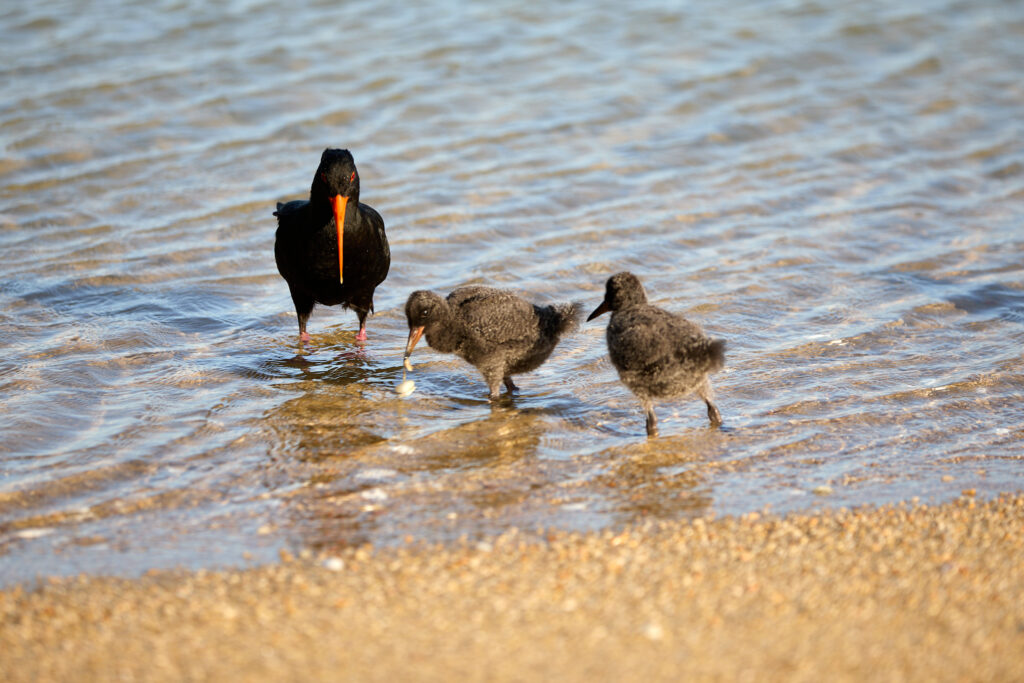
When the tide retreats, oystercatchers, with their distinctive long orange bills, become busy diners along the shoreline. They feed primarily on small shellfish, taking full advantage of the briefly exposed coastal buffet.
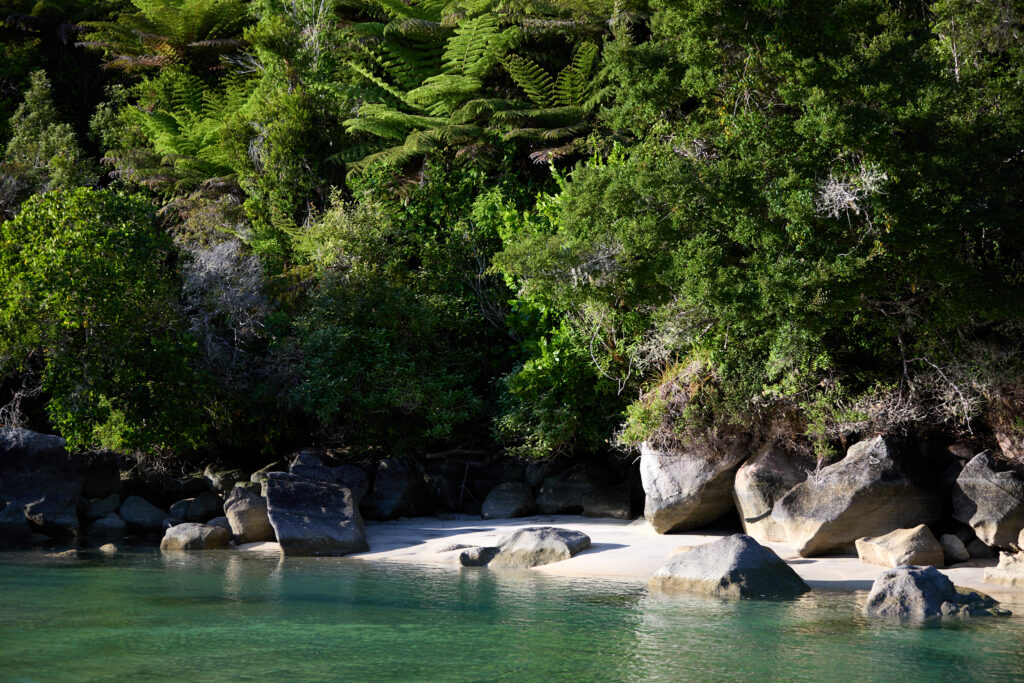
On my previous travels, I have visited several of New Zealand’s national parks, but Abel Tasman stands out clearly among them. It is the country’s smallest national park, its most visited, and the only one where trails wind through dense ancient forest that merges seamlessly with exotic beaches.
Despite its modest size on paper, the park certainly does not feel small at all. The terrain is fairly rugged, rising from sea level to just over 1,100 metres from the coast to the inland ridgelines, meaning the routes involve plenty of ascents and descents along the way. Despite the park’s popularity, I experienced no sense of crowding, and long stretches passed between encounters with other hikers on the trails.
I often try to include people in my photographs, as they help convey our longing for nature while also providing a tangible sense of scale within the landscape. In Abel Tasman, however, I frequently had to wait a long time before other visitors appeared and could naturally become part of my compositions.
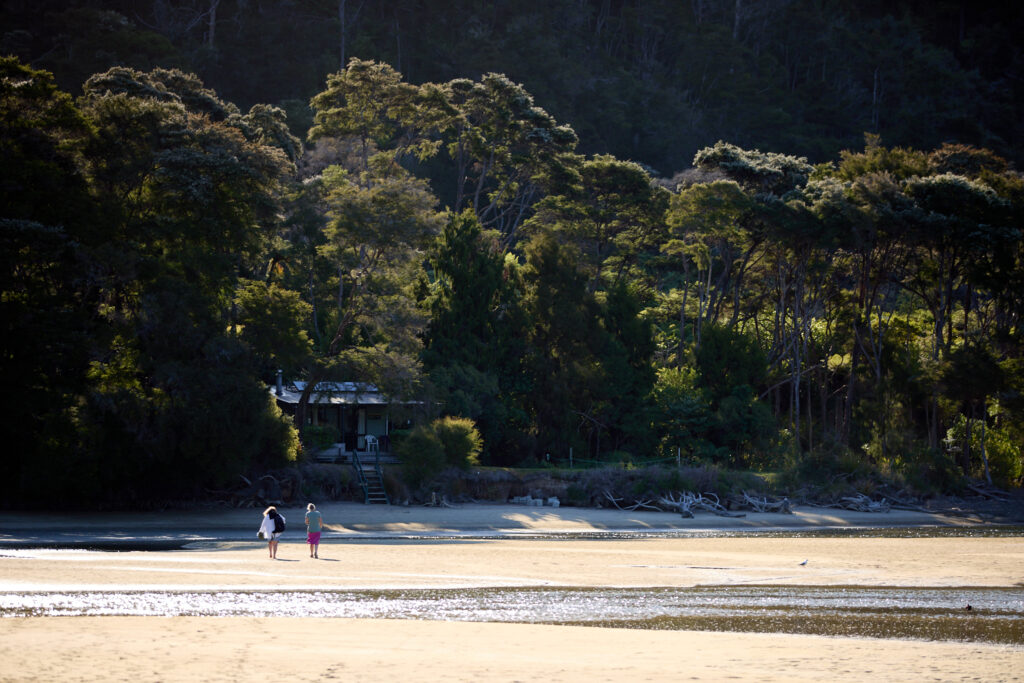
I arrived at Bark Bay after a seven-hour hike from Awaroa and pitched my tent about 50 metres from the shoreline, safely above the high-water mark. From the tent, I could look out across the bay and its turquoise-green waters, while the trees above provided welcome shade from the sun. Birdlife was everywhere, and at dusk and again at dawn, the gentle lap of the waves blended with a birdsong chorus from another world.
I could not recognise a single phrase from the familiar repertoire of Danish songbirds. It was deeply impressive, and the sheer volume of birdsong was astonishing. I don’t know exactly why they sing so loudly, but perhaps it has something to do with communicating across greater distances in more rugged terrain — voices evolved for something closer to a stadium concert.
The tūī, in particular, has a distinctive and remarkably varied vocal range, often sounding like a medley of borrowed melodies. It is an exceptional mimic, capable of imitating other songbirds with ease. Then there is the kākā, New Zealand’s native forest parrot, whose harsh calls dominate the soundscape. In Bark Bay, the species had nearly disappeared until it was reintroduced a few years ago. Today, kākā are breeding in the area and are slowly reclaiming their natural place in the forest.
Tired and richly nourished by the day’s experiences in nature, I crawled into my sleeping bag on the second day of my hike through Abel Tasman National Park. After listening to and admiring the evening concert from the treetops, I reached for my earplugs and drifted off to sleep.