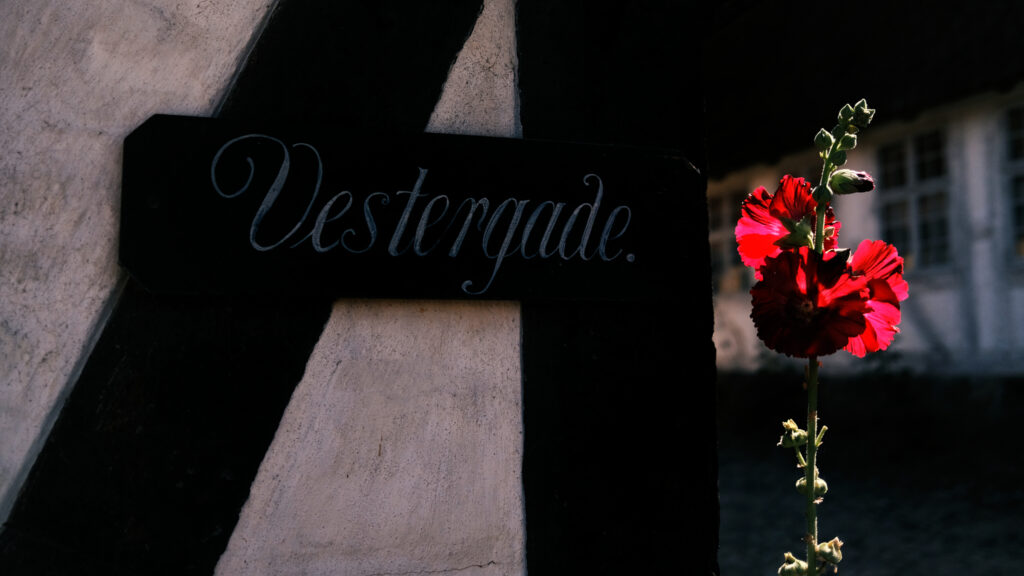
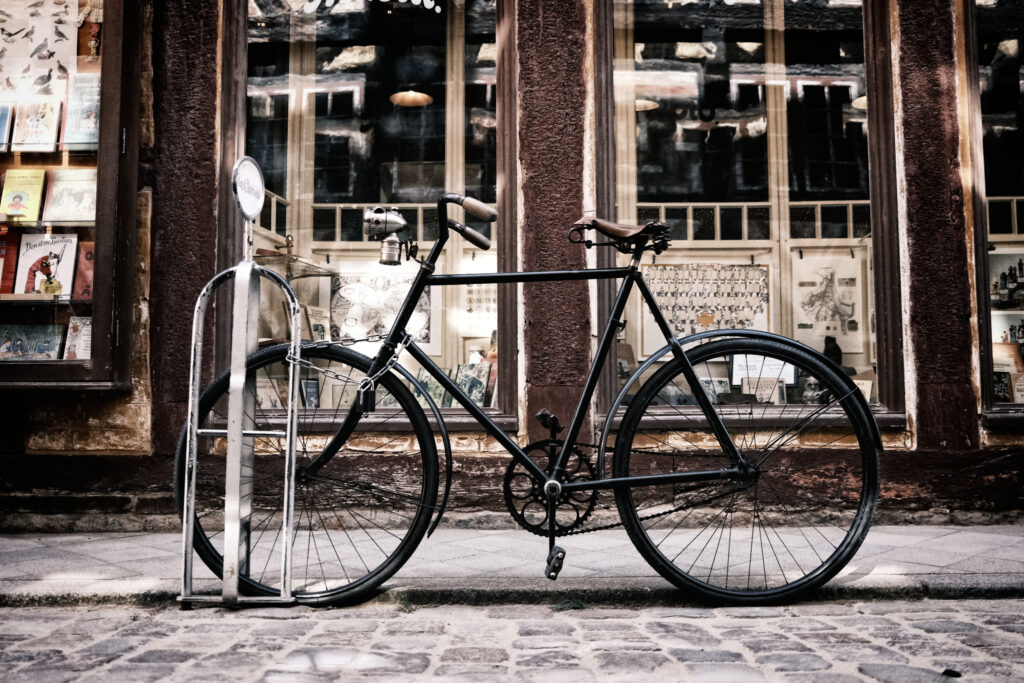
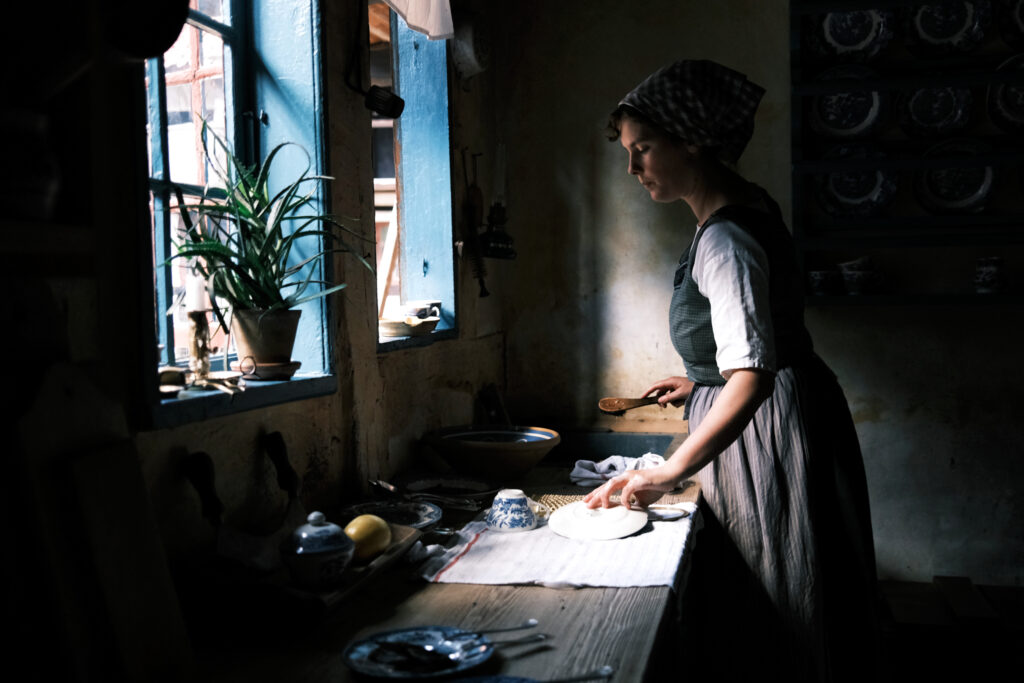
The Old Town in Aarhus is a place where history can be both observed and felt. Recently, I walked through its gates for the first time, and it felt like stepping into a landscape of memories, voices, and everyday life that have shaped the Denmark we know today.
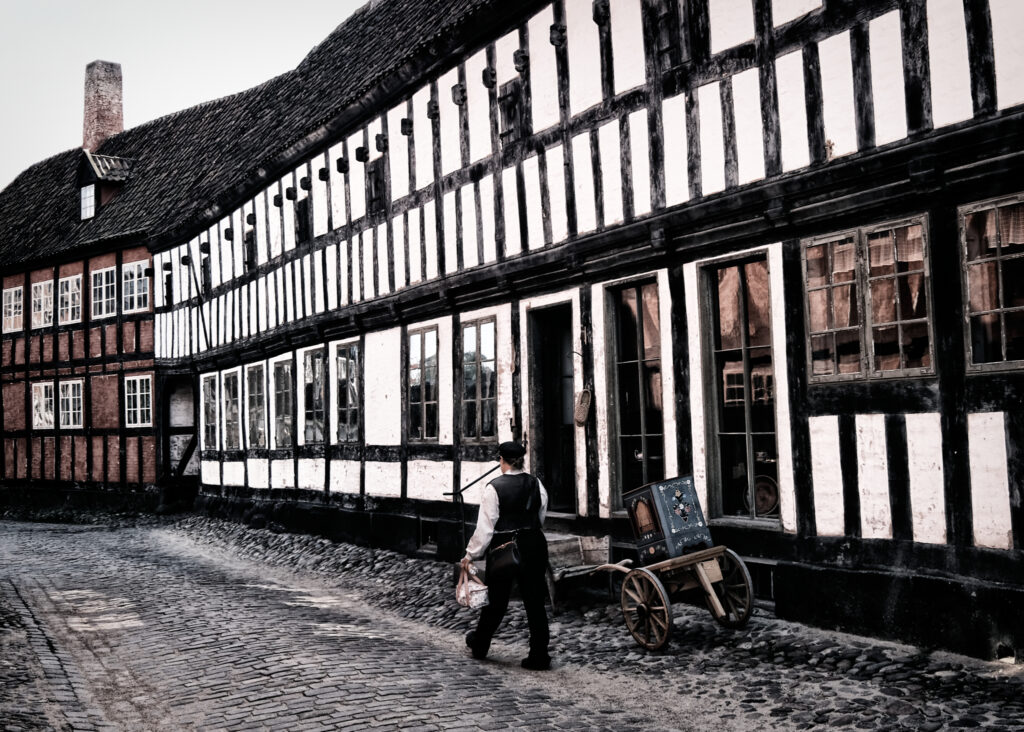
My fascination with The Old Town isn’t only about the old houses, but about the way they tell stories. Timber frames, crooked windows, and cobblestone streets stand as living proof that people once built, lived, and dreamed right here. It’s as if the walls still remember the hands that wore them smooth and the voices that once filled the rooms.
This museum is not a place you simply pass through—it’s a place you participate in. When you meet people in traditional clothing who greet you, work, and go about their lives, a strange feeling arises: you know it’s a reconstruction, yet for a moment you yourself become part of the story. You’re drawn into a different rhythm, a different life—one that was both harder and simpler, yet where presence and connection felt closer.
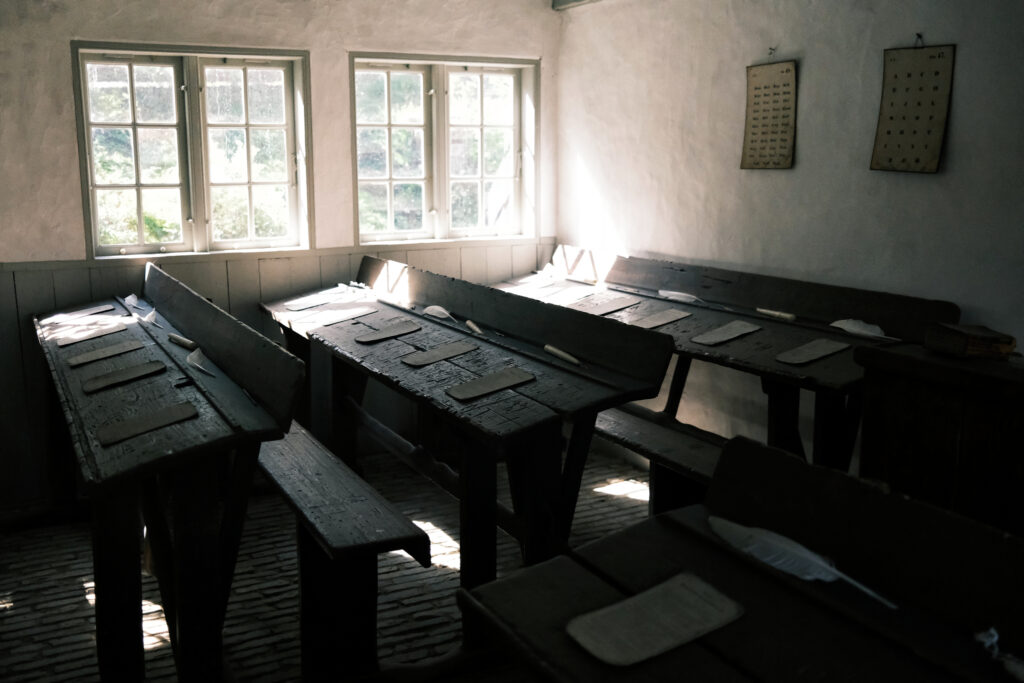
It’s also the details that make the place so captivating. The aroma of øllebrød, a traditional Danish beer-and-rye bread porridge, which the lady in the kitchen offered as a taste sample, cooked according to old recipes. The sound of horses’ hooves on cobblestones. The flavor of traditional dishes rarely found elsewhere. Even the smallest objects—a ceramic bowl, a quill, an oil lamp—invite you to pause and consider how they were once essential tools in a life we can now only imagine.
The Old Town is a patchwork of eras, where you can wander from the 17th century to the 1970s in just a few minutes. In this way, the place becomes not only a tribute to the past, but also a reminder of how quickly society changes—and how much we ourselves are part of that ongoing movement.